

Machine Learning vs Deep Learning: 10 Mind-Blowing Differences That Will Change How You View AI in 2026

Deep Learning vs. Machine Learning – FourWeekMBA
Imagine this: Your phone instantly recognizes your face in a crowded photo. Netflix nails your next binge-watch before you even know what you want. A self-driving car spots a pedestrian at night and brakes perfectly. These aren’t magic — they’re powered by artificial intelligence. But here’s the shocker most beginners miss: Not all AI is created equal. Behind the scenes, Machine Learning (ML) and Deep Learning (DL) are the real power players… and they’re very different.
In 2026, with generative AI exploding and tools like advanced transformers reshaping industries, understanding the difference between machine learning and deep learning isn’t just tech talk — it’s your edge in a job market where AI skills can boost salaries by 30-50%.
This ultimate guide breaks it down with real examples, simple analogies, a side-by-side comparison, and actionable advice. By the end, you’ll know exactly when to pick ML, when to go all-in on DL, and why one is quietly dominating the future of AI.

Read Also: What Is Artificial Intelligence? The Ultimate 2026 Beginner’s Guide to AI (No Jargon, Just Clarity!)
See More Posts in Jobs, Scholarships, Technology, Career/Motivations, Football News Feeds
Join Job Whatsapp Channel, Scholarship Whatsapp Channel, Tech Whatsapp Channel, Follow Our Twitter (X) Channel.
What Is Machine Learning? The Smart-but-Supervised Apprentice
Machine Learning is a subset of Artificial Intelligence that lets computers learn from data without being explicitly programmed for every single scenario. Think of it as teaching a super-smart apprentice: You give it examples (data), it spots patterns, and improves over time.
Key types of ML:
- Supervised Learning: Labeled data (e.g., “this email is spam”).
- Unsupervised Learning: Finds hidden patterns in unlabeled data (e.g., customer segmentation).
- Reinforcement Learning: Learns by trial and error with rewards (like training a dog with treats).
Classic ML algorithms include linear regression, decision trees, random forests, and support vector machines. It’s efficient, explainable, and perfect for structured data like spreadsheets or databases.
Real-world win: Traditional fraud detection in banking — ML models analyze transaction patterns and flag suspicious activity with high accuracy using relatively small datasets.
What Is Deep Learning? The Brain-Inspired Genius
Deep Learning is a specialized subset of Machine Learning that uses artificial neural networks with many layers (hence “deep”) to mimic how the human brain processes information. It doesn’t just learn patterns — it automatically discovers complex features from raw, unstructured data like images, audio, or text.
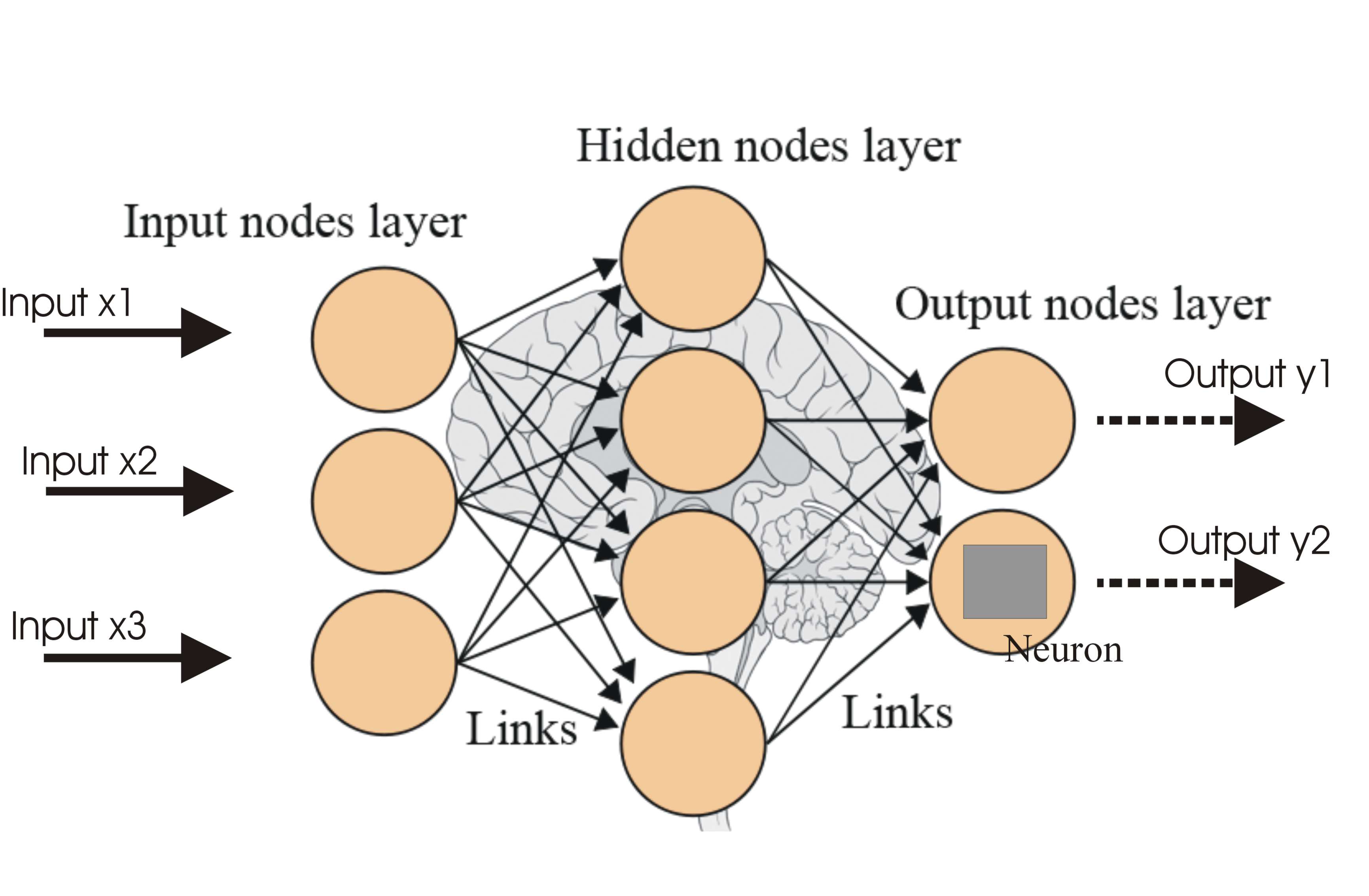
How it works in simple terms:
Data flows through input layers → hidden layers (where the magic happens) → output. Each layer extracts higher-level features. A single hidden layer? Basic neural net. Dozens or hundreds? That’s deep learning.
Popular architectures:
- Convolutional Neural Networks (CNNs) for images
- Recurrent Neural Networks (RNNs) and Transformers for text/speech
- Generative models like those powering GPT-style tools
Why it feels revolutionary: DL learns hierarchically. It doesn’t need humans to hand-pick features — it figures them out itself. But it demands massive data and computing power (think GPUs or TPUs).
Real-world win: Facial recognition on your phone or ChatGPT understanding nuanced questions — both DL at work.

The 10 Key Differences: Machine Learning vs Deep Learning (2026 Edition)
Here’s the head-to-head showdown that separates the two. (Pro tip: Save this table — it’s your quick-reference cheat sheet.)
| # | Factor | Machine Learning | Deep Learning | Winner in 2026? |
|---|---|---|---|---|
| 1 | Hierarchy | Subset of AI | Subset of ML (uses neural nets) | DL (more specialized) |
| 2 | Data Needs | Works great with small/medium datasets | Needs huge volumes of data | ML for startups |
| 3 | Feature Engineering | Manual (experts pick features) | Automatic (learns features from raw data) | DL |
| 4 | Human Intervention | High (tuning, labeling, fixes) | Low (learns from mistakes autonomously) | DL |
| 5 | Interpretability | High (you can explain decisions) | Low (“black box” — harder to debug) | ML |
| 6 | Hardware | Runs on standard CPUs | Needs GPUs/TPUs for heavy computation | ML (cheaper) |
| 7 | Training Time | Faster | Much longer (days/weeks) | ML |
| 8 | Accuracy on Complex Data | Good for structured/tabular data | Superior for unstructured (images, video, speech) | DL |
| 9 | Best Use Cases | Predictive analytics, recommendations | Computer vision, NLP, generative AI | Depends! |
| 10 | Scalability | Easier to deploy on edge devices | Powers cutting-edge breakthroughs | DL for innovation |
Mind-blowing analogy: ML is like a student studying a textbook with a tutor guiding every step. DL is like a toddler exploring the world, learning complex patterns through sheer experience — no tutor needed, but it takes way more “toys” (data) and time.
Real-World Examples: Where ML and DL Shine (or Struggle)
- ML in Action: Spotify’s early recommendation engine, credit scoring at banks, or predictive maintenance in manufacturing. Quick to build, easy to explain to stakeholders.
- DL in Action: Google’s AlphaGo beating world champions, autonomous vehicles (Tesla’s vision system), medical image analysis (detecting cancer in scans better than some doctors), or tools like Midjourney for art generation.
- Hybrid Wins: Many 2026 projects mix both — ML for initial filtering, DL for deep pattern recognition.
When to Choose Machine Learning vs Deep Learning: Your Decision Framework
Ask yourself these 5 questions:
- How much data do I have? (Small? → ML)
- Is the data structured or raw/unstructured? (Raw images/text? → DL)
- Do I need explainable results? (Regulatory compliance? → ML)
- What’s my budget for hardware/cloud compute?
- How fast do I need results?
Rule of thumb in 2026: Start with ML for 80% of business problems. Scale to DL only when performance gains justify the cost. Many companies now use “lightweight” DL or transfer learning to bridge the gap.
Pros & Cons at a Glance
Machine Learning Pros: Faster, cheaper, more interpretable, works with less data. Cons: Struggles with highly complex patterns.
Deep Learning Pros: Unmatched accuracy on perceptual tasks, automates feature discovery, powers modern AI breakthroughs. Cons: Data-hungry, expensive to train, black-box nature raises trust issues.
The Future in 2026: Hybrids, Efficiency, and Beyond
We’re seeing a boom in efficient DL (smaller models that run on phones), multimodal AI (handling text + images), and explainable deep learning techniques. ML isn’t dying — it’s evolving into the reliable backbone while DL handles the flashy, high-stakes innovations. The winners? Professionals who master both.
Conclusion: It’s Not ML vs Deep Learning — It’s About Choosing the Right Tool
Deep Learning isn’t “better” than Machine Learning — it’s different. One is the efficient craftsman; the other is the visionary artist. In 2026, the smartest AI strategies combine both for maximum impact.
Whether you’re a developer, business leader, or curious learner, understanding this difference puts you ahead. Ready to dive deeper? Start experimenting with scikit-learn for ML or PyTorch/TensorFlow for DL today.
What do you think — team ML or team DL?
FAQs About Machine Learning vs Deep Learning
Is deep learning just advanced machine learning? Yes — it’s a subset that uses multi-layered neural networks for more complex tasks.
Which requires more data? Deep learning almost always needs significantly more data to shine.
Can I run deep learning on a regular laptop? Basic models yes, but serious training needs cloud GPUs.
Will deep learning replace machine learning? No. They complement each other — ML remains essential for many practical applications.
Where to learn more in 2026? Coursera, fast.ai, or hands-on Kaggle competitions.