

Picture this: You’ve been job-hunting for months in Nigeria’s tough economy. Your phone lights up with a message – “Congratulations! You’ve been shortlisted for an aptitude test and interview at a reputable firm in Magodo, Lagos. Come prepared with your documents.”
Heart racing with hope, you dress up, jump on a bus, and head there. But what happens next isn’t the dream job you imagined. It’s phones snatched, cash gone, or worse – a one-way trip to a kidnappers’ den.
This isn’t a movie script. It’s the terrifying reality hitting desperate job seekers across Nigeria right now in 2026. Recent cases in Lagos’ Magodo Estate saw groups of applicants lured to fake interviews, only to be robbed blind. Older but still relevant stories from Abuja and beyond show scammers using phony job offers to kidnap victims for ransom.
Unemployment is high, and scammers know it. They prey on your desperation with slick WhatsApp messages, fake company names, and promises of ₦200k+ salaries for entry-level roles. But one wrong move, and you could fall into the hands of kidnappers or ritualists disguised as recruiters.

Don’t become the next headline. This detailed, no-fluff guide exposes the exact red flags, real-life tactics, and life-saving steps every Nigerian job seeker must know before stepping out for any interview or aptitude test. Read it fully – your safety (and freedom) could depend on it.
See More Posts in Jobs, Scholarships, Technology, Career/Motivations, Football News Feeds
Join Job Whatsapp Channel, Scholarship Whatsapp Channel, Tech Whatsapp Channel, Follow Our Twitter (X) Channel.
Why Job Scams and Kidnapping Traps Are Exploding in Nigeria Right Now
Nigeria’s job market in 2026 is brutal. With millions of graduates and youth chasing limited opportunities, fake employers flood WhatsApp, Instagram, and even LinkedIn with “urgent vacancies.”
Some scams are “soft” – they just steal your data or a small “processing fee.” Others turn deadly: victims are drugged, robbed, kidnapped for ransom, or worse. Police in Lagos recently arrested suspects after job seekers were lured and robbed in broad daylight. In earlier cases documented by Punch Newspapers, desperate applicants ended up in kidnappers’ dens after responding to phony job ads.
The bait? “No experience needed,” “Work from home,” or “Immediate employment after aptitude test.” The hook? A quick chat interview that feels too easy.
10 Deadly Red Flags That Scream “SCAM – Don’t Go!”
Here’s the checklist. If you spot even 2-3 of these, cancel immediately and block the contact.
- You Never Applied, But They “Shortlisted” You Real companies rarely cold-call strangers. Unsolicited SMS or WhatsApp invites for roles you didn’t apply for? Classic scam template. Legit firms use official portals like their website or verified job boards.
- Poorly Written Messages Full of Errors “Dear applicant, you ar shortlisted for aptitude test tomorow at 10am. Pls come with your CV and 2 passport.” Grammar disasters and typos are a dead giveaway. Professional recruiters don’t send these.
- No Official Company Email or Website Communication comes from Gmail, Yahoo, or random numbers instead of @companyname.com. No verifiable website or CAC-registered RC number? Run!
- They Ask for Money – Any Money NEVER pay for forms, training, uniforms, medical tests, or “refundable deposits.” Legitimate employers pay YOU, not the other way around. This is the oldest trick in the book.
- Interview Happens Only on WhatsApp or Text No video call, no Zoom, no in-person HR screening. Scammers avoid showing faces. Real aptitude tests and interviews involve proper channels.
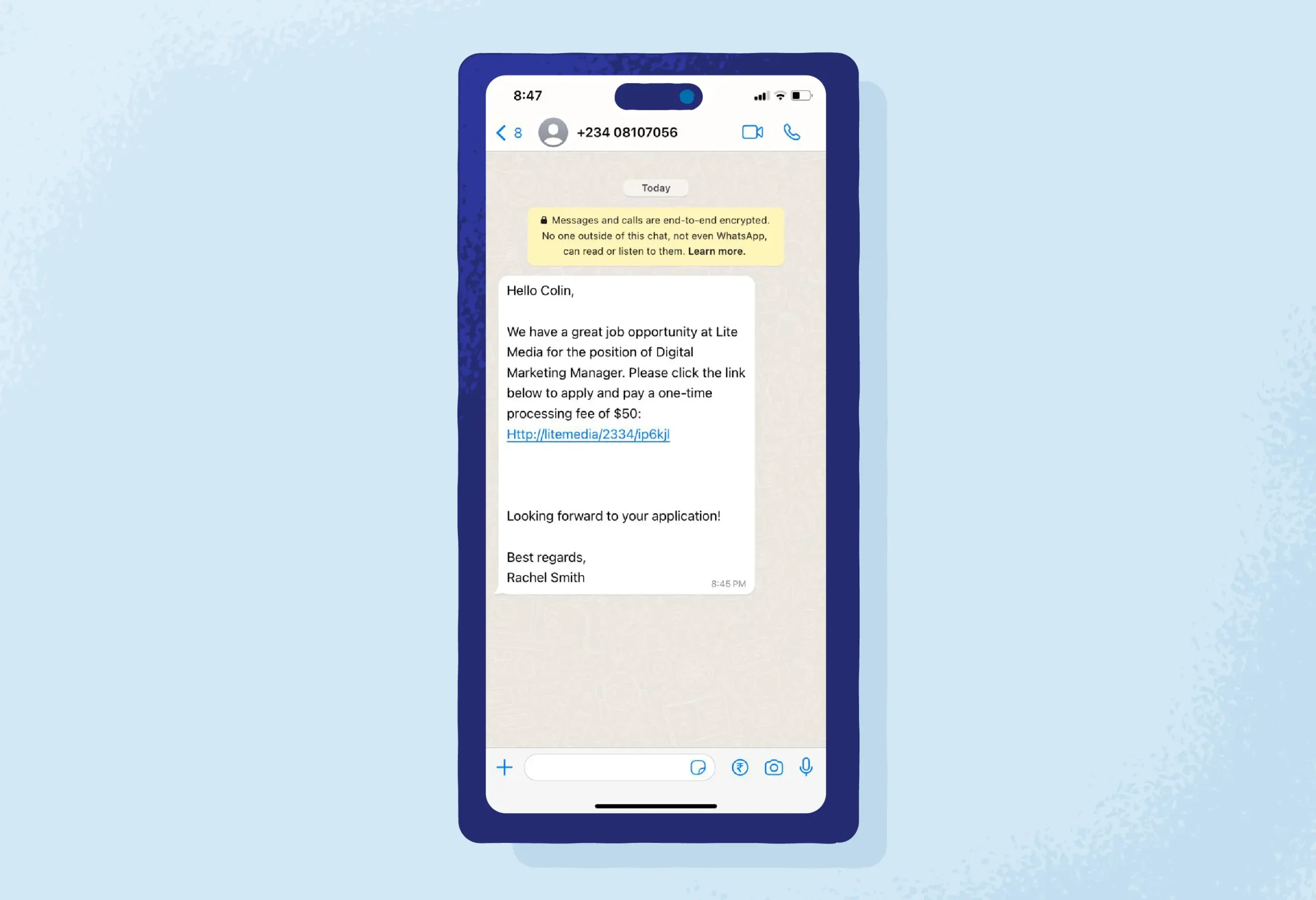
- Suspicious or Vague Location “Meet at a hotel lobby,” “Private estate in Magodo,” “Unknown address – we’ll send driver.” Or last-minute changes. Genuine companies use verifiable offices you can Google Maps. Ladies especially: never go to hotels or private homes for interviews.
- Too-Good-to-Be-True Salary or Perks ₦300,000 starting for fresh graduates with no experience? Luxury car + housing? That’s bait. Compare with real market rates on Jobberman or LinkedIn.
- Urgency and Pressure Tactics “Come tomorrow or lose the slot!” “Don’t tell anyone – it’s confidential.” Scammers want you isolated and rushed so you can’t verify.
- Fake or Stolen Company Name They drop big names like “Dangote” or “MTN” but the details don’t match. Quick Google search reveals the real company doesn’t recruit this way.
- They Want Your Bank Details or ID Too Early Before any offer letter? Huge red flag for identity theft or “advance fee” setups.
Pro Tip: Screenshot everything and reverse-image search their logo or photos. Scammers often steal images from real companies.
See Also: How to Choose the Right Career Path (Even If You’re Unsure What You Want): The Ultimate 8-Step Guide
How to Verify a Job Offer in 5 Minutes (And Stay Safe)
Don’t just hope – verify like a detective:
- Google the company + “recruitment scam” or check their official careers page.
- Call the real company using numbers from their verified website.
- Search CAC portal for the RC number they claim.
- Check LinkedIn – message real employees or see if the “recruiter” exists.
- Ask for an official email invite on company letterhead.
If they dodge any of these, it’s not real.
Smart Safety Rules for Real Interviews (Never Break These)
Even if it looks legit:
- Never go alone. Take a trusted friend or family member. Share your exact location, time, and contact via WhatsApp Live Location.
- Public first. Meet in a busy, open place (café or mall) before heading to any office.
- Transport smart. Use Bolt/Uber with tracking on, or public transport. Avoid their “free ride.”
- Tell someone everything. Send the full message, address, and “recruiter’s” number to at least two people.
- Trust your gut. If something feels off at the venue, leave immediately. Your safety > any job.
What to Do If You’ve Already Been Scammed or Feel Trapped
- Don’t pay a kobo more.
- Report immediately: Call police (112 or nearest station), NPF Cybercrime Unit, or use the EFCC whistleblower line.
- Warn others: Post on Nairaland, Twitter/X, or job seeker groups (without doxxing yourself).
- Recover: Change passwords, monitor your accounts, and freeze any cards if details were shared.
Recent Lagos cases show that quick reporting helps police track these gangs fast.
Check This: How to Get Hired for Entry-Level Jobs With No Experience in 2026: The Ultimate Step-by-Step Guide
Final Word: Your Dream Job Is Out There – Don’t Let Scammers Steal It (or You)
Job hunting in Nigeria is tough enough without navigating kidnappers and scammers. But knowledge is your best armor.
Share this article with every job seeker you know – your sibling, friend, or classmate could be next. Stay vigilant, verify everything, and never let desperation cloud your judgment.
You deserve a real job with a real company. Protect yourself first, and the right opportunity will come.
Have you encountered a suspicious job invite?
Let’s keep each other safe in 2026.
Stay safe out there. Share this post and tag a job seeker who needs it.